
What is presbyopia?
When an object moves closer to the eye, its retinal image shifts backward and the eye must increase its optical power to keep the image focused on the retina. This phenomenon is known as accommodation and is achieved through the bulging of the lens. The eye has a maximum accommodative capacity at birth, but this capacity decreases with age due to a loss of elasticity of the lens. After the age of forty, the lens is no longer able to increase its power sufficiently to form sharp images of nearby objects. The eye becomes presbyopic.
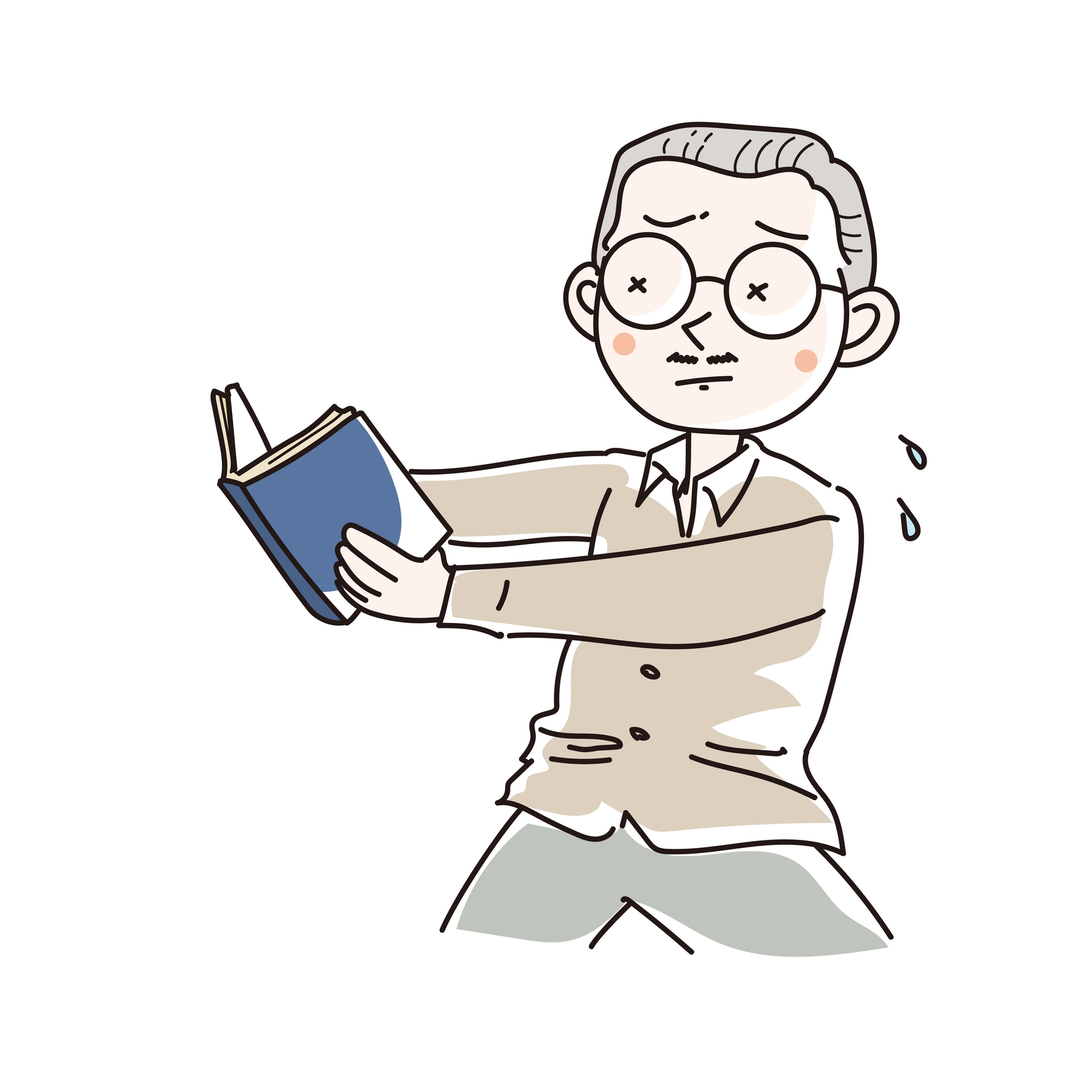
To see clearly up close, people with presbyopia tend to extend their arms to move objects such as a book or a newspaper farther away.
The principle of presbyopia correction is:
- Either placing a positive-power lens or contact lens in front of the eye to compensate for insufficient accommodation.
- Or modifying the curvature of the cornea using a laser to increase the eye’s optical power. This is the principle of the (excimer) laser used in PRK or LASIK procedures.
- Or implanting a lens inside the eye (multifocal intraocular lens).
Book an appointment with your ophthalmologist in Uccle
If you are experiencing difficulty seeing up close and are over 45 years old, don’t wait—book an appointment with me.